
June 22, 2026
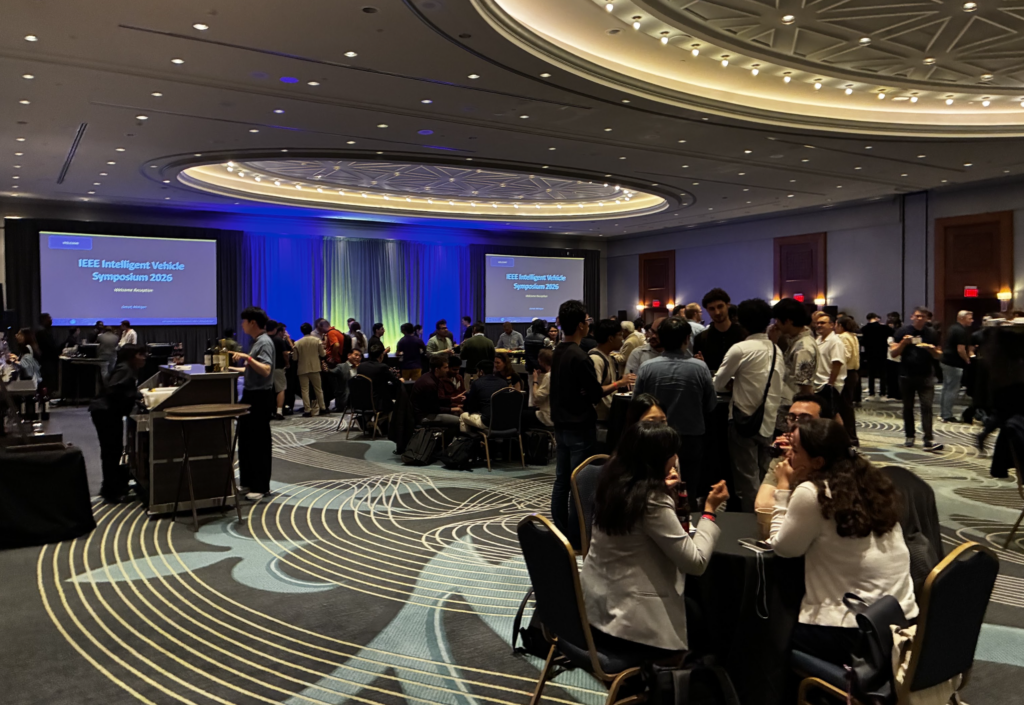
Along with NYU Tandon, Rochester Institute of Technology, and Oak Ridge National Laboratory, C2SMART cohosted the Digital Twins for Intelligent Vehicles symposium at IEEE IV in Detroit. The day-long event, which focused on how digital twins are reshaping intelligent vehicles, connected infrastructure, and city-scale mobility systems, featured a keynote address from M City director and University of Michigan Prof. Henry Liu.
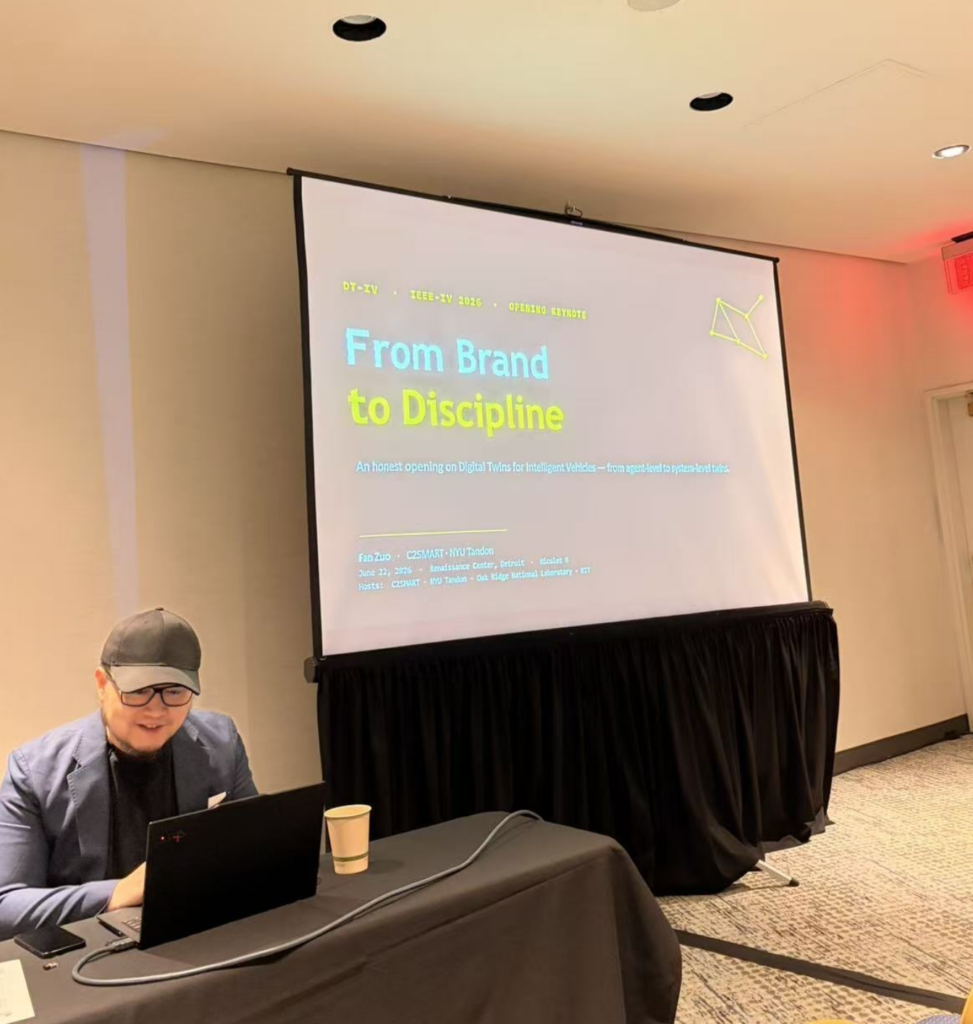
The morning session, System-Level Digital Twins: Platforms, Behavior, and Mobility Operations, explored system-level digital twin platforms and applications.
Presentations included:
- Fan Zuo (NYU C2SMART), opening remarks
- Zilin Bian (RIT), Parallel Digital Twins for Emergency Mobility: Rehearsing Safe and Time-Critical Traffic Decisions
- Lishengsa Yue (Tongji University) Ozone: A Unified Platform for Transportation Research
- Yuankai (William) He (University of Delaware), A Closed-Loop System-Level Digital Twin to Evaluate Connected and Autonomous Mobility
- Yang Zhou (Texas A&M University), From Observation to Imagination: Digital Twins and Generative AI for Traffic Safety
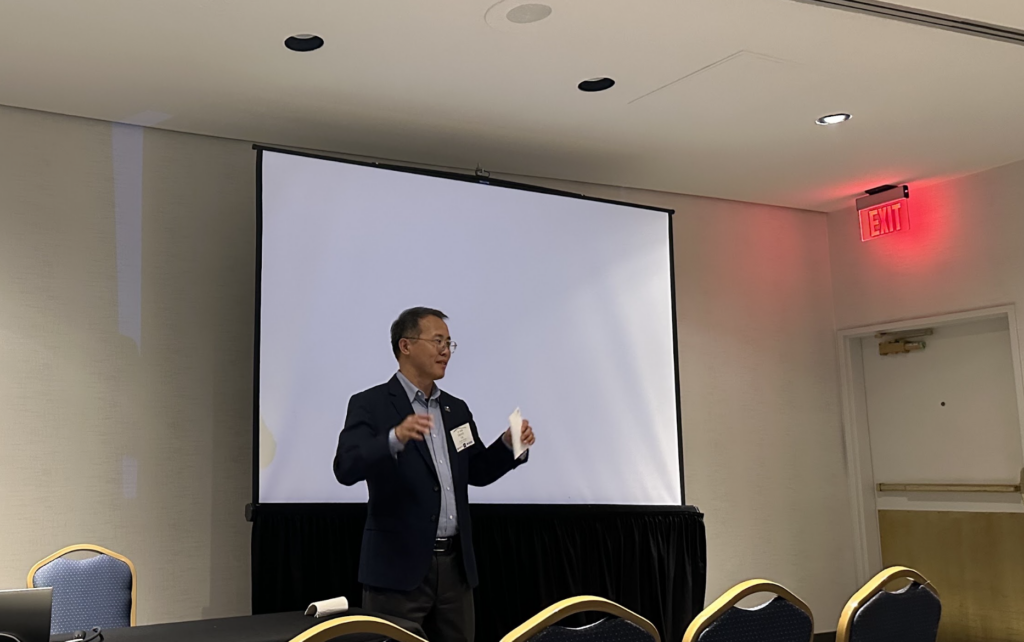
The afternoon session Vehicle-Centric Digital Twins: Integration, Safety, and Validation, shifted the focus toward intelligent vehicles and autonomous driving systems. Presentations included:
- Henry X. Liu (MCity), opening remarks
- Jiawei Wang (University of Michigan), Uncovering Unknown Unsafe Events through Generative Simulation for End-to-End Autonomous Vehicles
- Tianming Liu (University of Michigan), Behaviorally Aligned LLM Agents for Intelligent Transportation Digital Twin
- Hanlin Chen (Oak Ridge National Laboratory), From Data to Digital Twin to Vehicle-in-the-Loop: ORNL’s Large-Scale 3D Urban Digital Twin Pipeline forIntelligent Vehicles
Across both sessions, the workshop highlighted a central challenge for the field: advancing digital twins for intelligent vehicles from high-fidelity modeling and demonstration toward validated, operationally meaningful systems. Discussions emphasized the need for digital twins that can support safety assessment, remain credible as traffic behaviors and operating conditions evolve, integrate physical and virtual testing environments, and provide trustworthy decision support for both vehicle-level intelligence and system-level mobility management.
The event helped clarify a shared research agenda for the field: building digital twins that are closed-loop, empirically validated, resilient to failure and manipulation, reproducible across environments, and useful for both vehicle-level intelligence and system-level mobility management.