
October 28, 2026
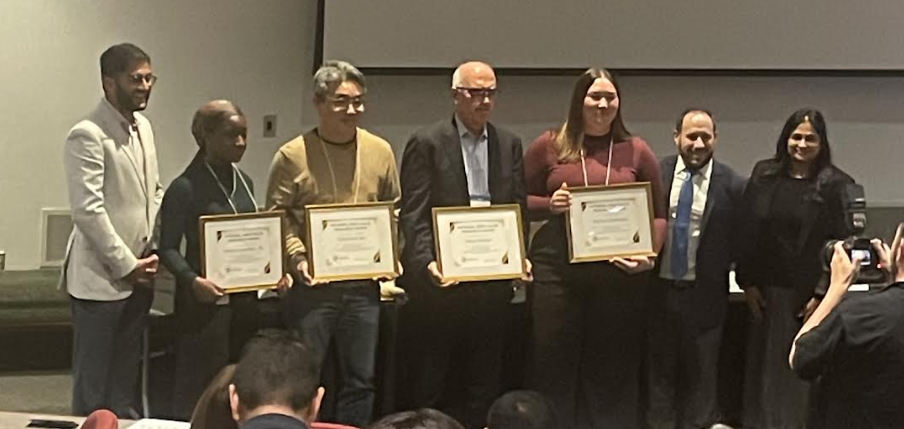
In late October, a research team from Rutgers, led by C2SMART Center Associate Director Prof. Hani Nassif, was awarded the 2026 High Value Research Award from the American Association of State Highway and Transportation Officials (AASHTO) Research Advisory Committee (RAC).
Rutgers received the recognition for their project NJDOT Multi-Hazard Design of Highway Bridges Recommendations, which was completed earlier this year. On the heels of the award ceremony, we sat down with Prof. Nassif and Senior Research Associate Chaekuk Na to discuss their research.
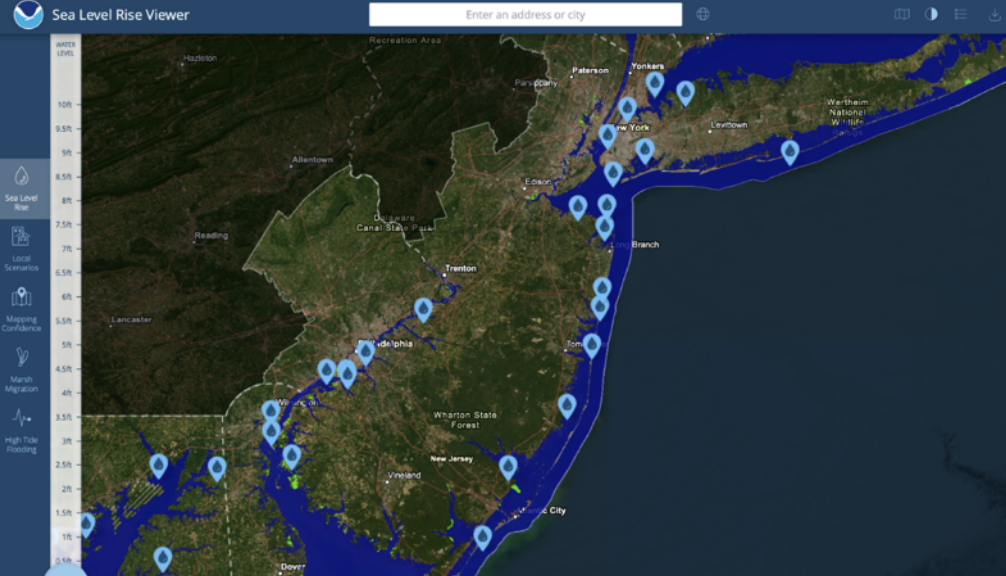
Please give us a description of the project itself. What was the objective?
The project provides a multi-hazard (MH) design framework for highway bridges in New Jersey that considers multiple natural and human-caused hazards, including hazards that may occur concurrently, sequentially, or have compounding effects. The framework is intended to support a risk- and performance-based approach to bridge design, rather than considering each hazard independently.
How is your project unique? Why is it important now?
The framework considers how multiple hazards interact and how their combined effects influence bridge performance and risk. The framework distinguishes between concurrent and sequential hazards as well as their compounding effects, and provides recommendations for load factors and load combinations. This approach will help avoid overdesigning every bridge for every possible hazard, while ensuring that relevant combined effects are appropriately considered.
Who was on the team?
- Hani Nassif, PE, Ph.D at Rutgers University
- Patrick Lou, Ph.D at HNTB (formerly Rutgers University)
- Harry A. Capers Jr. at Arora and Associates, P.C. (NYU Polytechnic alum)
- Chaekuk Na, Ph.D at Rutgers University
What were some key learnings of the project? Were there any lessons learned?
Multi-hazard design requires consideration of both the likelihood and the consequences of hazards, rather than assuming that the maximum occurrence of each possible hazard will occur concurrently. Site-specific information is also critical, as the relative importance of different hazards can vary substantially depending on the bridge location and configuration, as well as surrounding conditions. Applying this risk-based design concept to future bridge projects can improve resilience while minimizing unnecessary increases in project costs.
“The project’s recognition by AASHTO RAC highlights the importance of its recommendations for improving bridge resilience as well as the collaborative efforts that brought the research from concept to implementation.” Can you expand on this?
AASHTO RAC recognizes the technical contribution of the research and its potential practical value to transportation agencies. This project demonstrates the collaborative research activities among Rutgers University, the NJDOT Bureau of Research and Innovation (BRI) and Subject Matter Experts (SMEs), and industry practitioners to ensure that the recommended MH design framework is grounded in both research as well as actual bridge design practices.
This award marks the second AASHTO Research Advisory Committee (RAC) Award for the Rutgers team; in 2013 Prof. Nassif also received the High Value Research “Sweet Sixteen” Award for their Elimination of Weight Restriction on Amtrak, NJ Transit, and Conrail Line project. This work, funded by the New Jersey Department of Transportation, was one of the selected sixteen projects out of more than 100 nominees for the 2013 AASHTO RAC award.
View the C2SMART co-hosted Rutgers Infrastructure Monitoring and Evaluation Group (RIME) Workshop webinar series here to learn more about their Bridge Resource Program research.