Development of Level of Service Analysis Procedures and Performance Measurement Systems for Parking

This project aims to develop LOS analysis procedures that estimate or measure the average search time for selected types of parking facilities. Additionally, alternative evaluation methodologies for parking operations based on the IOT will be explored. The new smart cities approach to measure customer service is dubbed PMS to distinguish it from the LOS analysis procedure. Cities are interested in making better use of smart meter usage data.

Work Zone Safety: Behavioral Analysis with Integration of VR and Hardware in the Loop

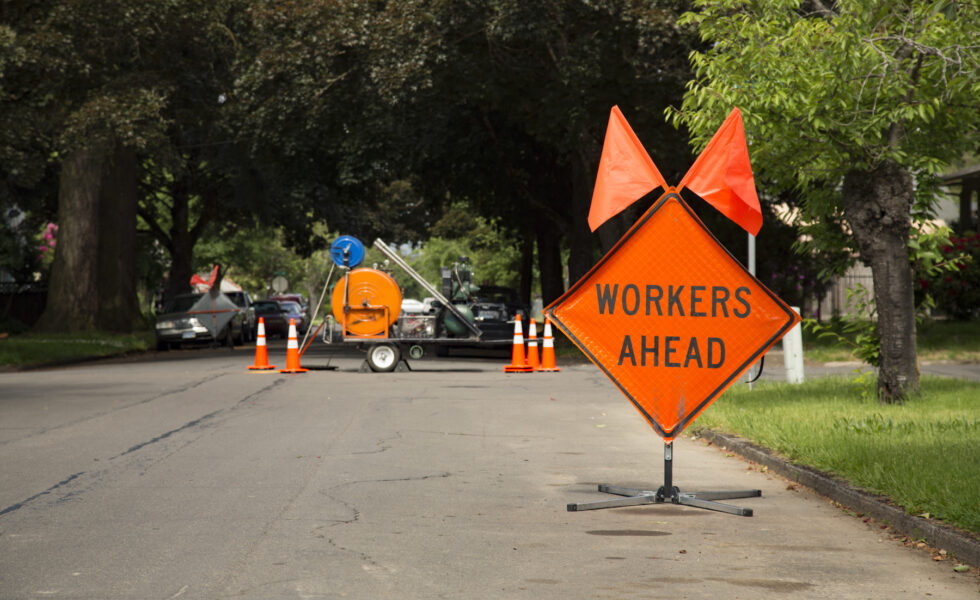
This project aims to understand the key parameters that play a role in achieving responsive behaviors in workers. Through wearable sensors and representations of traffic loads from real data acquired from hardware in the loop systems and work zones in virtual reality, data on workers’ behavioral and physiological responses to warnings issued under various realistic scenarios and varying warning mechanisms will be studied.

Wearables to Command More Access and Inclusion in a Smarter Transportation System

This project will increase the safety profile and ease-of-use of the VISION (Visually Impaired Smart Service System for Spatial Intelligence and Onboard Navigation) platform toward ‘connected’ dynamic navigation in complex urban environments, providing a new level of security to the end user and permitting one to break down significant barriers to employment and social interaction.

Learning to Drive Autonomously

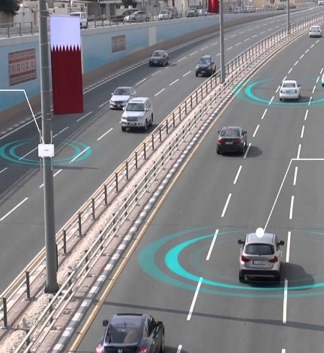
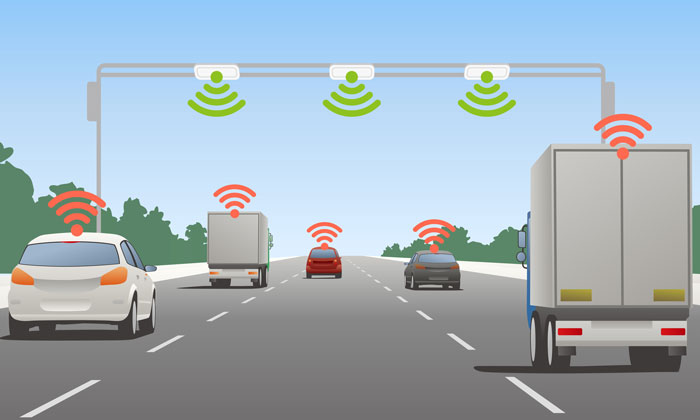
Autonomous vehicles (AV) and connected vehicles (CV) technology has been much of the focus of transportation industry lately, and they will likely make a vast impact on the future of transportation systems. This project will combine AV and CV technologies for connected and autonomous vehicles (CAVs) to reduce congestion and improve network performance and safety by developing new tools and methods using reinforcement learning and nonlinear and optimal control techniques.

Securing Intelligent Transportation Systems against Spoofing Attacks

Game theory is a powerful tool for security risk analysis that has been extensively used in various engineering systems, and game-theoretic approaches have been applied to studying the security of routing in transportation and communications. This project will be the basis for a synthesis of game theory and queuing theory, essential for capturing the interaction between the queuing dynamics and players decisions, in order to protect the ITS system from spoofing and attacks.

Development and Tech Transfer of an Integrated Robust Traffic State and Parameter Estimation and Adaptive Ramp Metering Control System

Dr. Zhou and Dr. Ozbay found that, if the traffic flow parameters are time-varying and/or the knowledge of these parameters are biased, the performances of a traffic state estimator that has assumed them to be known and fixed-valued can be significantly downgraded. Moreover, only augmenting these parameters into the state vector and then resorting to nonlinear recursive estimation techniques such as extended Kalman filter (EKF) cannot solve the issue. This is because, under a CTM-based traffic estimator, the critical density is unobservable under free-flow conditions, and hence biased initial knowledge of the critical density can cause false switching of the working model of the estimator and distort the estimation afterward.

Utilizing Social Media Data for Estimating Transit Performance Metrics in a Pre- and Post-COVID-19 World

This perception of transit can be captured through the sentiment of posts made by users on social media. Performance metrics based on user perception can provide the service provider a customer-facing view of their service and help enhance their service and address the user concerns, especially from a public health standpoint in a post-COVID lockdown world, appropriately.